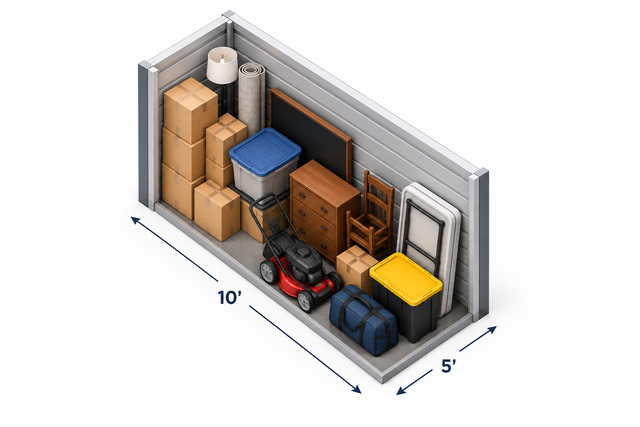
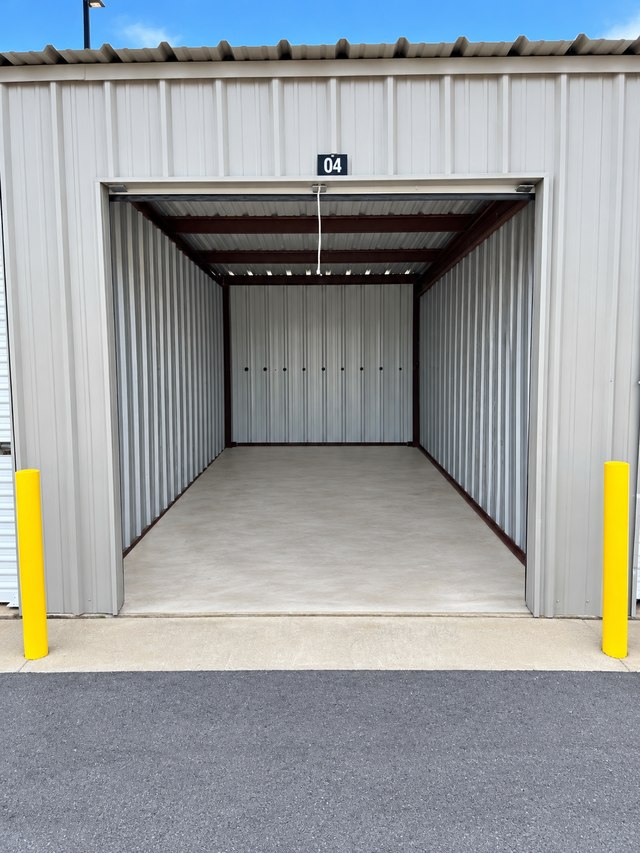
Think: A large walk-in closet
A 5×10 storage unit gives you approximately 50 square feet of floor space and is an excellent choice when you need extra room but aren't storing the contents of an entire home. Although compact, a well-organized 5×10 can hold a surprising amount, especially when boxes, totes, and smaller items are stacked vertically.
This size works particularly well for the contents of a studio or small one-bedroom apartment without a large amount of furniture. You can typically fit items such as a queen mattress and box spring stored upright, a dresser, nightstands, small tables and chairs, lamps, bicycles, several boxes and storage totes, seasonal decorations, sporting equipment, tools, and other household belongings.
A 5×10 is also a great option when your goal isn't moving. Use it to clear out closets, reclaim space in the garage, store college belongings between semesters, rotate seasonal items, or keep small-business supplies and inventory out of your home.
If you're storing several large pieces of furniture, major appliances, or the contents of multiple rooms, however, moving up to a 10×10 will usually make packing and accessing your belongings much easier.
Best for: Decluttering, apartment overflow, college storage, seasonal items, boxes, small furniture, sporting equipment, tools, and small-business inventory.
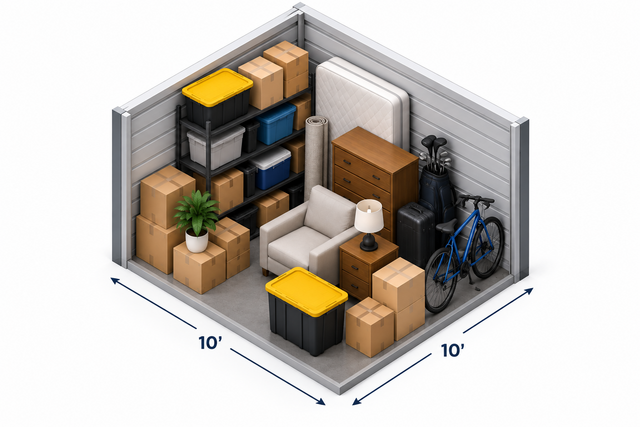
Think: About a small bedroom, office or half of a standard one car garage
At approximately 100 square feet, a 10×10 gives you twice the floor space of a 5×10 and is one of the most versatile storage sizes.
For many customers, this is where storage starts to feel like an extra room rather than an oversized closet. A 10×10 can typically accommodate the furnishings and belongings from a one-bedroom apartment or a modest two-bedroom space, depending heavily on the amount and size of the furniture.
Common items include mattresses and bedroom furniture, sofas and chairs, coffee and end tables, dining sets, dressers, bookcases, televisions, bicycles, patio furniture, boxes and totes, and some major appliances. With careful packing and vertical stacking, there is enough room to consolidate a significant amount of household property.
It's also a particularly useful size during home renovations or remodeling projects. Furniture from a bedroom, living room, dining area, or other portion of the house can be moved out temporarily while you work.
For business customers, 100 square feet can provide meaningful space for boxed inventory, records, equipment, marketing materials, tools, and supplies without taking over an office, garage, or spare room.
If you're trying to store most of the contents of a multi-bedroom house or several bulky appliances and furniture pieces at once, I'd recommend looking at the 10×20 instead.
Best for: One-bedroom apartments, smaller moves, remodeling projects, furniture, appliances, household overflow, business inventory, records, equipment, and longer-term storage.
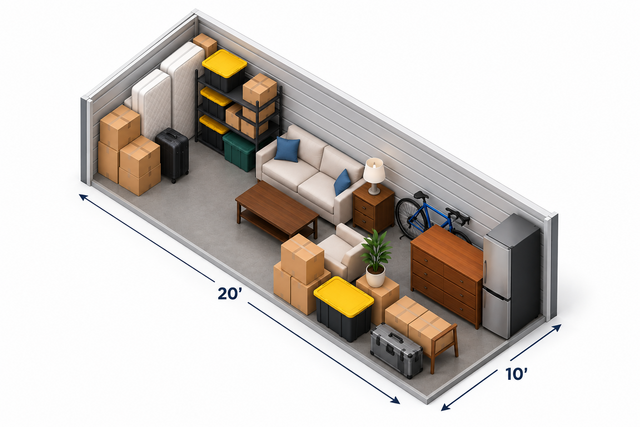
Think: A standard one-car garage
A 10×20 provides approximately 200 square feet of storage space, making it a significant step up from our smaller units. This is the size to consider when you're storing the contents of a home rather than simply freeing up a room or closet.
Depending on how much furniture you own, a 10×20 can typically accommodate the contents of a two or three bedroom home, including larger household furnishings. Sofas, bedroom sets, mattresses, dining room furniture, dressers, bookcases, patio furniture, boxes, totes, bicycles, lawn equipment, and many major appliances can be stored together.
The 20-foot depth also makes organization important. If you'll need regular access to your belongings, create a narrow aisle from the door toward the back and keep frequently needed items near the front. If you're storing everything during a move and won't need access until move-out, tighter packing can make much more efficient use of the available space.
A 10×20 is especially useful when moving between homes, downsizing, renovating several rooms, handling an estate, or temporarily storing most of a household.
For businesses, 200 square feet provides substantial room for inventory, equipment, tools, supplies, displays, archived records, seasonal merchandise, or materials. Shelving along the walls can make the unit even more useful while preserving floor space.
The biggest advantage of the 10×20 is flexibility: it's large enough for serious household or commercial storage without moving all the way up to one of our oversized garages.
Best for: Two- to three-bedroom homes, major moves, downsizing, renovations, large furniture, appliances, household contents, contractors, equipment, and substantial business inventory.
Think: An oversized two-car garage
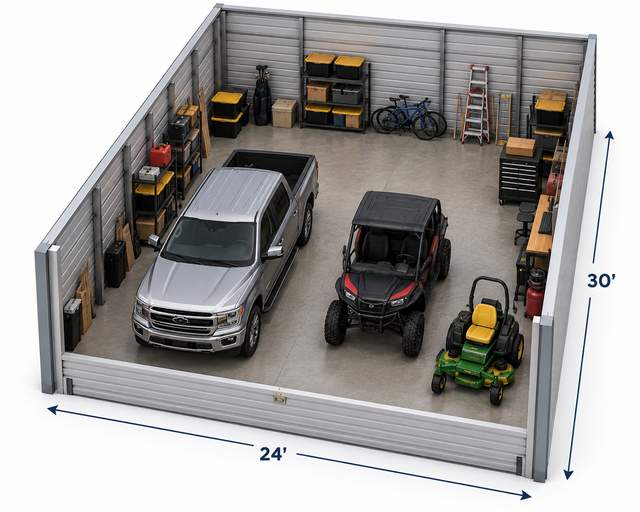
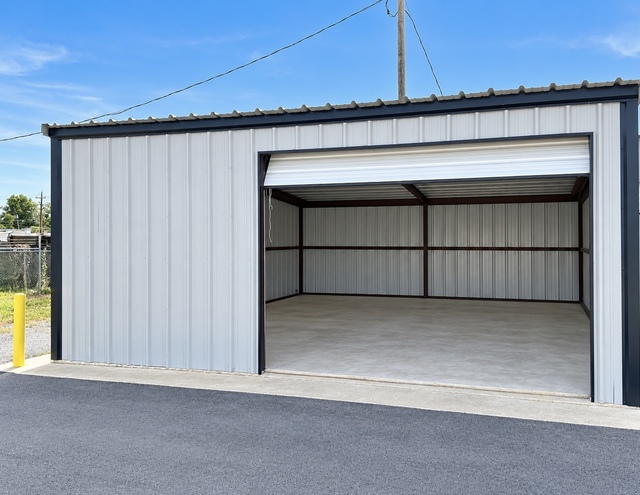
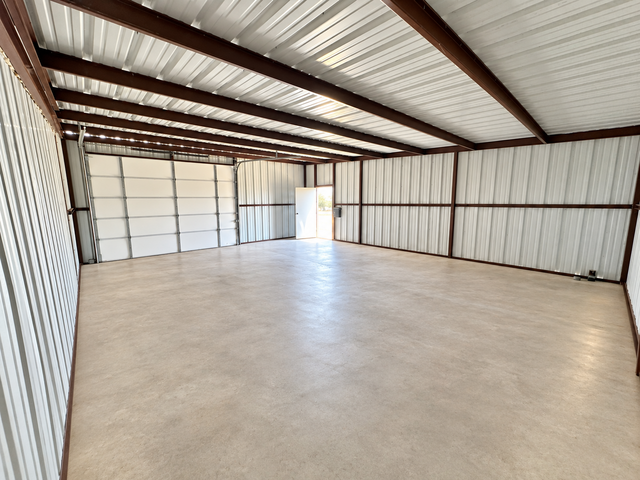
Our 24×30 garages are in an entirely different category from a traditional storage unit. At approximately 720 square feet, each garage provides more than three-and-a-half times the floor area of a 10×20.
This is a strong option when you need to store large quantities of belongings, vehicles, equipment, or a combination of all three.
For household storage, a 24×30 can accommodate the contents of a larger home with considerable room for furniture, appliances, boxes, outdoor equipment, and other belongings. It can be particularly useful during a major relocation, extended renovation, estate transition, or when consolidating belongings from multiple locations.
Where this space really stands out, however, is its ability to combine vehicle and equipment storage with traditional storage. Depending on the dimensions of the individual items and how the garage is arranged, you may be able to store a car or pickup alongside items such as a side-by-side, riding mower, motorcycles, bicycles, tools, shelving, household belongings, or business equipment.
For contractors and businesses, 720 square feet can provide room for tools, equipment, materials, inventory, shelving, work supplies, seasonal merchandise, and other commercial property. It's particularly attractive when a standard 10×20 simply isn't enough room.
Because vehicles, trailers, boats, and equipment vary dramatically in length, width, and height, customers storing unusually large items should measure the items including mirrors, hitches, attachments, trailers, and accessories and compare those measurements with the garage and door dimensions before renting.
Best for: Large household moves, vehicle storage, contractors, business inventory, equipment, side-by-sides, motorcycles, lawn equipment, extensive furniture storage, and customers who simply need significantly more space.
Think: Dedicated space for your biggest toys
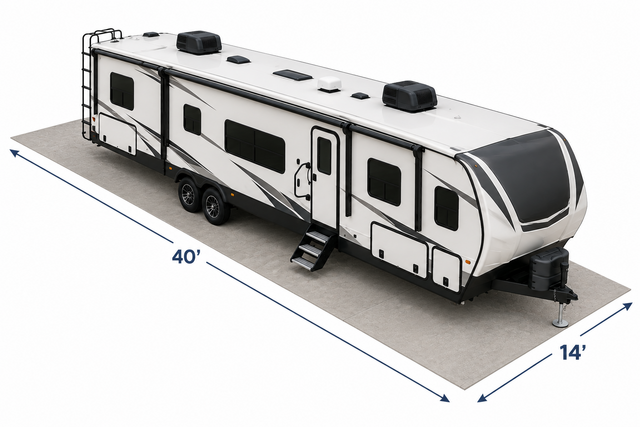
Our 14×40 open parking spaces provide approximately 560 square feet of outdoor parking area for vehicles and recreational equipment that simply don't belong in your driveway.
The 40-foot length makes these spaces suitable for many travel trailers, campers, motorhomes, boats on trailers, utility trailers, enclosed cargo trailers, car haulers, work trailers, and other recreational or commercial vehicles. Depending on the vehicle's actual dimensions, they may also accommodate larger Class A, Class B, or Class C motorhomes; fifth-wheel campers; toy haulers; pontoon boats on trailers; fishing boats; ski and wake boats; personal-watercraft trailers; and larger pickup or commercial vehicles.
They can also be useful for ATV and side-by-side trailers, landscaping trailers, construction trailers, equipment trailers, classic or secondary vehicles, and other oversized vehicles that are appropriate for outdoor storage.
Best for: Travel trailers, motorhomes, campers, fifth wheels, toy haulers, boats and trailers, pontoons, utility trailers, enclosed trailers, car haulers, equipment trailers, work trailers, recreational vehicles, and other large vehicles that fit within the space.